

Why the Order of Returns Can Matter More Than the Returns Themselves
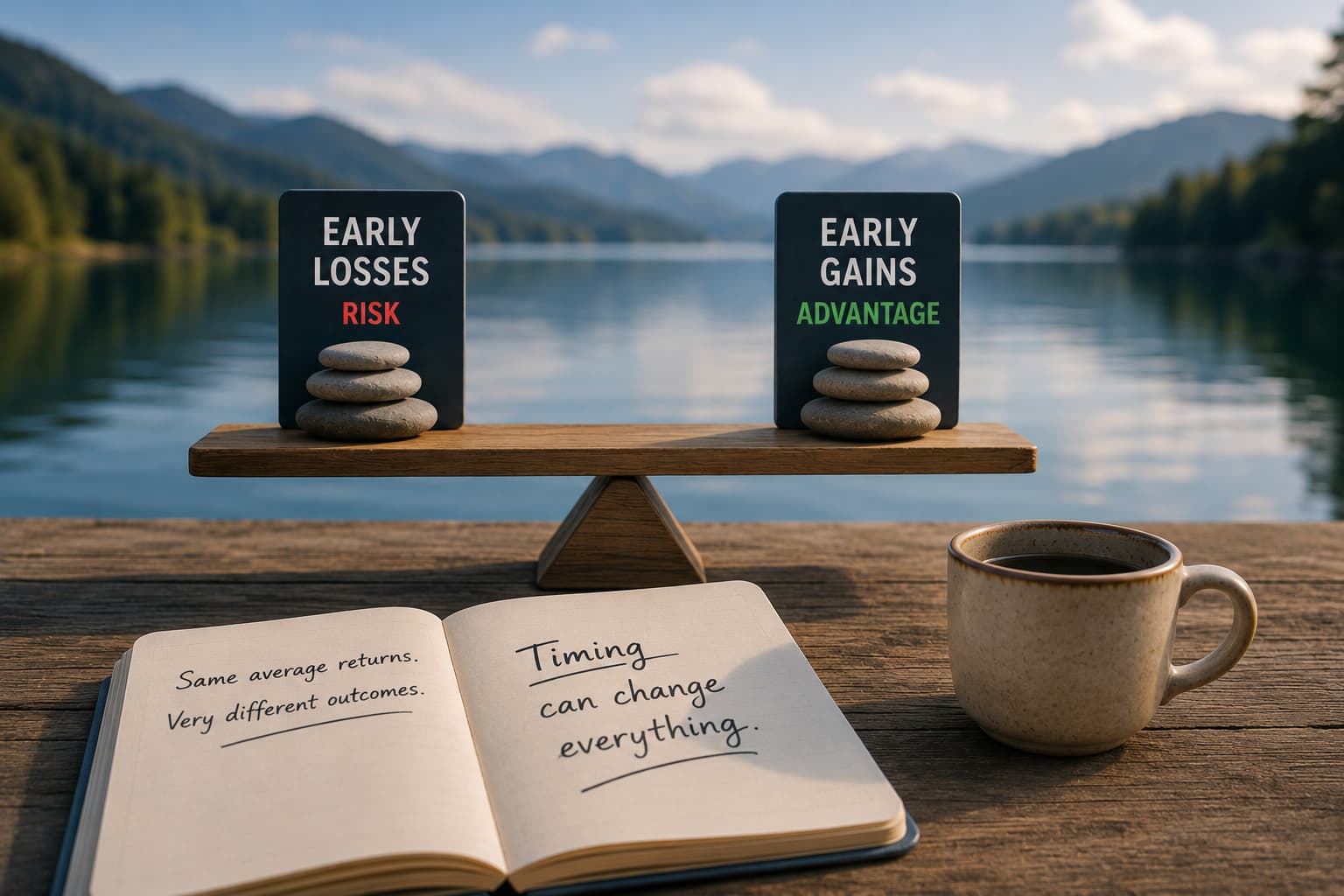
Here is one of the most counterintuitive ideas in retirement planning. Take two people with identical pension pots and identical average investment returns over 20 years. One of them runs out of money in their 70s. The other is still financially comfortable in their 80s. The only difference? When their good years and bad years happened.
This is sequence of returns risk - and it is one of the most important concepts to understand once you are approaching, or already in, the drawdown phase of your retirement.
Before Retirement, Timing Barely Matters
While you are still paying into your pension and not drawing anything out, the order of your annual returns has very little effect on your final pot.
Say your portfolio returns -20% in year one, then +40% in year two. Or the reverse: +40% then -20%. After two years, you end up in roughly the same place either way. The money stays invested throughout, so the sequence does not really matter. What counts is the average.
That changes the moment you start withdrawing.
After Retirement, the Order Can Be Critical
Imagine you retire with £500,000 and plan to withdraw £25,000 a year.
Person A has a difficult start. Markets fall 20% in year one, another 15% in year two, before recovering with gains of 18% and then 12%.
Person B has the same four years of returns - just in reverse order. Strong gains first, then the downturn.
Same pot. Same withdrawals. Same average annual return across the four years.
Yet Person B finishes in a significantly stronger position. Why?
When Person A's portfolio is falling in years one and two, they are still making withdrawals. Those withdrawals come from a pot that is already shrinking. Fewer investments remain when markets recover - so there is less to benefit from the upturn. And crucially, future growth now compounds from a smaller base.
Person B, by contrast, had two strong years first. That early cushion meant the downturn hit a larger, healthier pot - and the same withdrawals came from a position of strength.
This is sometimes called "selling your future growth." When you withdraw from a falling portfolio, you lock in losses permanently. Those units or shares are gone, and cannot participate in any subsequent recovery.
What You Can Actually Do About It
Sequence of returns risk cannot be predicted or avoided entirely - markets will do what markets do. But there are well-established strategies that can meaningfully reduce your exposure.
Hold a cash buffer. Keeping one to three years of planned spending in cash means you do not have to sell investments during a market downturn. You draw from cash while you wait for recovery, leaving your portfolio intact.
Diversify properly. A portfolio spread across asset classes - equities, bonds, property, alternatives - is less likely to fall sharply all at once. Volatility in one area may be offset by stability in another.
Stay flexible with spending. Reducing discretionary withdrawals in years when markets have fallen can make a meaningful difference to long-term sustainability. The occasional quieter year early in retirement is far less costly than selling at the bottom.
Consider a bucket strategy. Some retirees divide their savings into short-term, medium-term, and long-term buckets - with cash for immediate needs, bonds or lower-risk assets for the next few years, and equities held for longer-term growth.
Plan for sequence risk before you retire. If you have some flexibility on timing, even a year or two of additional contributions during a period of strong returns can build a meaningful buffer.
A Note on Planning Tools
The Finance Planner in RetirePlan models your drawdown projection using average annual return assumptions applied consistently over time. This is the right approach for long-term planning - no one can accurately predict the year-by-year sequence of future markets, so building a plan around honest average assumptions is both practical and sensible.
What the planner cannot do - and what no tool reliably can - is simulate every possible sequence of good and bad years against your specific withdrawal plan. That is not a limitation of the tool; it is an honest reflection of how uncertain markets are.
What it does give you is a clear baseline: what your income could look like, when different pots might deplete, and whether your overall plan holds up under reasonable assumptions. From there, the most important thing is to stay engaged with your plan over time - reviewing it after significant market moves and adjusting withdrawals or spending if needed. Sequence risk is best managed in real time, with a clear picture of where you stand.
Ready to see how your plan looks? Download the free RetirePlan app on the app stores or web - your first projection takes less than 10 minutes.



 Back to Search